About BDIC MedTech
BDIC MedTech, established in June 2023 as a spinout from Ulster University in the UK, specialises in designing innovative wireless power supply and charging systems for medical implants. This includes devices such as artificial hearts and left ventricular assist devices (LVADs). Currently, BDIC is developing next-generation wireless energy transfer technologies for implantable cardiac assist devices, including LVADs and Total Artificial Hearts (TAHs).
Our Technology
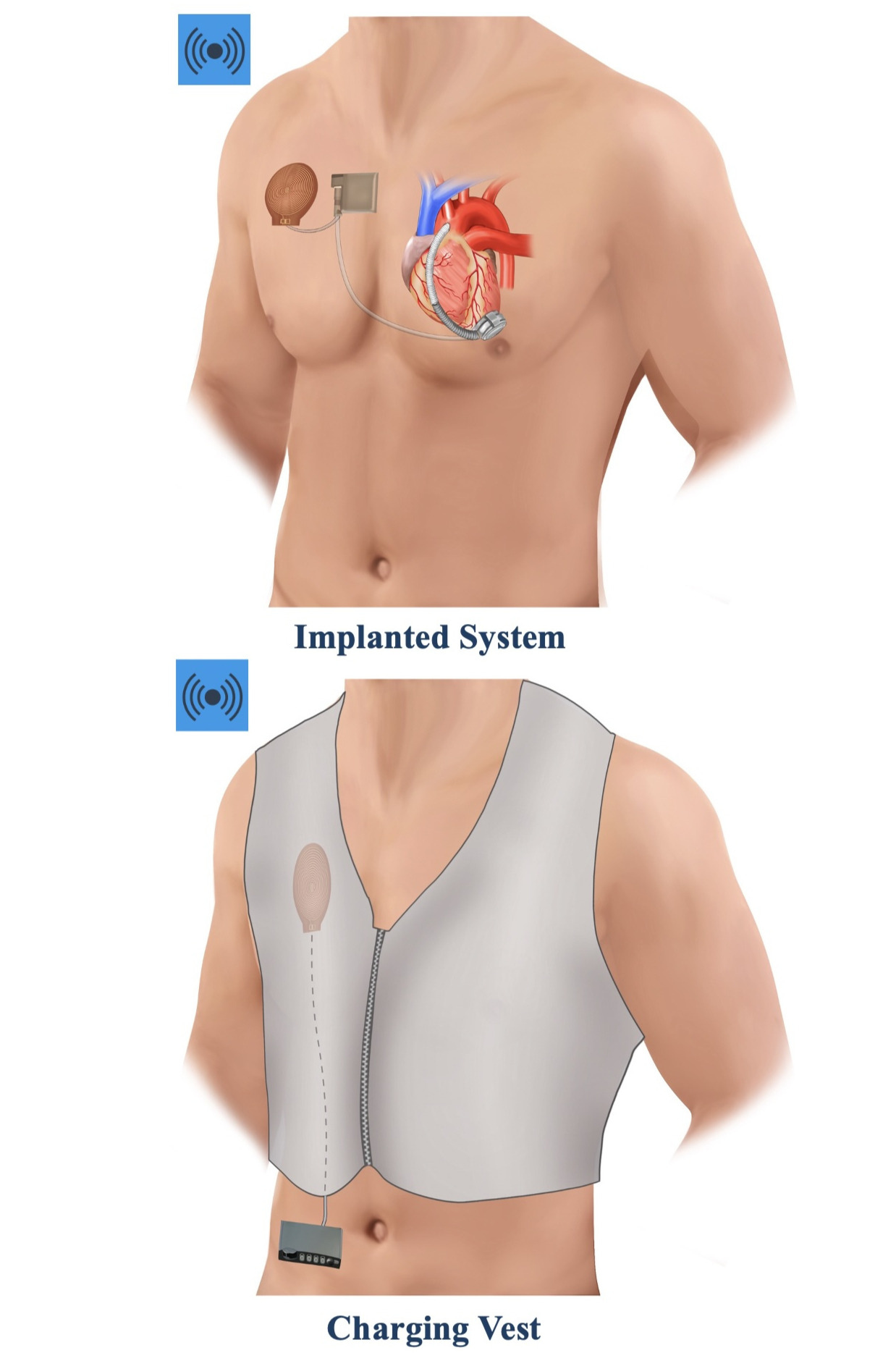
Our platform is an advanced transcutaneous energy transfer (TET) system designed to safely and efficiently power implantable cardiac assist devices without the need for percutaneous drivelines. The platform combines advanced radio-frequency (RF) engineering, AI-enabled control systems, biocompatible implant technologies, and thermal-safe energy delivery architectures to create a next-generation solution for fully implantable mechanical circulatory support.
Unlike conventional systems that rely solely on continuous inductive coupling, Our technology employs a hybrid coupling architecture engineered to improve electromagnetic coupling efficiency, reduce transmission losses, and enhance tolerance to positional misalignment between implanted and external modules.
A key innovation within our TET platform is its intelligent adaptive control capability. Using embedded sensing and AI-driven optimisation, the system dynamically adjusts power transmission parameters in real time to maintain safe tissue temperatures, stable energy delivery, and operational reliability under changing physiological and alignment conditions.
The platform also incorporates advanced thermal management strategies to address one of the major barriers to wireless powering of implantable devices: RF-induced tissue heating. Through pulsatile transmission methods, reduced duty-cycle operation, optimised coil geometries, and continuous thermal monitoring, the system is designed to minimise heat accumulation while maintaining clinically relevant power delivery levels.
High-fidelity electromagnetic and Multiphysics simulations are used to optimise RF power-transfer efficiency, electromagnetic coupling parameters, specific absorption rate (SAR), and tissue-heating behaviour prior to prototype fabrication and preclinical validation.
The platform is being developed to support future clinical translation and regulatory readiness, with system architectures aligned to the requirements of advanced Class III implantable medical devices. By combining efficient wireless power delivery, intelligent safety control, and scalable implant integration, Our aim to establish a clinically viable pathway toward fully implantable wireless-powered LVADs and Total Artificial Hearts.
Our mission is to enable fully implantable, wirelessly powered cardiac assist devices that improve patient survival, reduce infection-related complications, and enhance quality of life for patients with advanced heart failure.
By removing the driveline barrier, Our TET platform will transform the future of mechanical circulatory support and establish a new generation of safer, smarter, and more patient-centred implantable medical technologies.